Saturday, January 21, 2023

HOW CAN I PART WITH THESE BOOKS?!

Mr. Penumbra’s 24-Hour Bookstore tops the teetering tower, its neon yellow cover a beacon calling for a re-read. Can’t do it now; I’m here on a mission. I pick up Mr. Penumbra and search for any tiny gaps between the books on the shelves that might grant entry. No luck. I must purge before I can place it. 


I was thrilled when Dave attacked the area on his side of the bed, a dusty potpourri of paperwork and books. In his nightly enthusiasm for Words with Friends and Solitaire over reading, his backlog of books had multiplied to the point of obstruction. One fine day, he cleared it out and pointed proudly to the easy access he’d created. Well done!


That is, until I went to get a book from our tiny nook of a library and discovered where all those books had gone.  


Truth is, we have too many books. Even if Dave had tried to put them away, he would have been foiled. When it’s time to organize and clear things out, I’m the one to do it. Order is my sanity.


As I embark on this mission, I am guided by two precepts. First, would either of us ever read a given volume again? Second, we are not throwing books away, but donating them to the public library, a better use than limbo on the third floor. 


With Mr. Penumbra put aside to accompany me downstairs, I address the rest of the pile. Sudden Sea, the story of the hurricane of ‘38, is a keeper. I’ve read it four times and will read it again. Thanks, Obama, a memoir by one of the president’s speechwriters, goes in the maybe pile. John Boehner’s On the House is a cutting peek into Republican politics that Dave might enjoy. Suddenly I realize that most of the books from Dave’s bedside migration are those I’d recommended once I finished them. Hence the prominence of Penumbra, a book I loved. Many are keepers that require homes on the shelves; better to start with benchwarmers that have occupied space for too long. 


As I said, order is my sanity, so I’m disciplined about rooting through things and hauling rejects to the dump or Goodwill. As I survey the fiction shelf, I realize there’s not going to be much give there; these shelves have been purged before. Peace Like a River and A Gentleman in Moscow are both on my list for a third reading, and I periodically cycle through the assortment of Dickens, Hiaasens, Irvings, and Austens. Better to take a crack at the history and children’s sections.


Hm. These volumes are history all right, but they represent our history as well. Adjacent to books by McCullough, Philbrick, and Goodwin are those studied by high school Lea. At 17, I’d envisioned a life sifting the sands of Egypt, striking a hard surface, spotting some hieroglyphs, and discovering a tomb. I tug out When Egypt Ruled the East, Up the Nile, andThe Conquest of Civilization and flip through pages, turning them sideways to read the copious notes I’d scribbled in the margins. The Egypt shelf is crowded with titles I’ll never read again, but, oh the soft halo of memory in picturing myself so young, immersed in tales of Ramesses and Tutankhamen with my gift of a teacher, Miss Smedley. Do I hold on… or let go? 


I pause and sit back. Survey the mess on the floor and the half-filled boxes. The shelves and piles still to go. I run my hands over my face, breathe deep, and blow out a long rush of air. 


HOW CAN I PART WITH THESE BOOKS?!  


My inner harpy is firm: Put them in the box! Think of Tucker and Casey’s dismay when they discover these books, floor to ceiling, and have to lug away this Egypt crap. And do you really need those near-shredded paperback Shakespeare plays from Doc Dando’s class?  Or that yellow wall of National Geographics? By then, you might be living the high life on the Other Side, but do you want the kids stuck with this? 


No. Sigh. So, I compromise, for now asking myself only to reduce the number in each category. I select a few titles and authors to save, then fill a box with well-worn books I once cherished, underlined, and dog-eared.  


Onward! Hm again. Books on crafts and quilts and country living carry me back to Lea of the eighties, a young mom with a sewing machine tuned and ready to make curtains, dolls, decorations, and crib bumpers. So much of my life then was intangible: hours spent picking up after the kids would be undone within minutes. But I could create a corduroy bear that might last decades… just like my mom’s childhood toy. 


Almost 30 years have passed since then, and these voluminous full-color editions, complete with patterns, would better serve somebody else. My, they are heavy… and take up space. I pack a dozen into a box and smile to see some open room. With a swipe of a torn tee-shirt rag, I dust the shelf and move on.


Crockett’s Victory Garden, Back to Basics, Early Tools, and Eric Sloane’s Sketches of America Past speak to our world and leanings in the 70’s and 80’s. We lived on a campus with like-minded souls dedicated to the well-being of children with learning disabilities and appreciative of the do-it-yourself orientation of that era. Dave built cupboards and benches we still use, and we scoured tag sales for old furniture to refinish. Weekends were scented with the acrid stench of Zip Strip and accompanied by a scratchy sandpaper soundtrack as we removed fifties favorites, lime and green paint, to reveal the honey-brown hues of raw pine. 


Now that he’s retired, Dave spends more time in his basement workshop. When the sound of the band saw whines through the floorboards, I know he is happily at work. So, books by Sloane and his fellow carpenters will stay.


Several shelves are crammed with Dave’s professional resources and books about the Beatles, Rolling Stones, baseball, and guitars. These are his loves, his career, and our music. When Dave plays a slow version of “She loves me” on the piano or “Helplessly Hoping” on his guitar, I sit quietly on the stairs seeking to soak it in, freeze the moment, and store his voice on the spools of my mind. So, I give this section a cursory once-over and make a small pile of possible rejects. Dave told me he trusts me on this process of elimination, but I’ll grant him the ultimate yea or nay. 


Four half-shelves hold my in-home therapists, a host of wise souls who, with friends and family, buoyed and guided me when life seemed ill-fitting and my path unclear. One’s forties can be tricky, and the likes of Wayne Dyer, Rachel Remen, Sarah Ban Breathnach, and Robert Fulghum provided healing counsel and company. 


Idly, I pull out Rachel Remen’s Kitchen Table Wisdom. The pages are of heavy, cream-colored stock, and the lines are generously spaced. The book is a just-right length of 333 pages, not a tome, but long enough to get the feel of the author, to sense in her a friend. I understand the appeal of Kindles, but really, nothing is as soothing as a favorite book in hand. 


I open to a dog-eared page. Rachel’s life wasn’t easy: she was diagnosed with Crohn’s disease at age 16 and fought her way through to a degree in medicine. When she wrote the book, she’d switched disciplines to counsel cancer patients. Her stories are about gratitude, recognizing the sacred in simple things, and the joy in strengthening and celebrating others. To me, she speaks truth: gratitude and connection lift the soul. 


Next, the shelves holding Casey and Tucker’s childhood favorites. We have two copies of Good Night Moon, one torn and taped, so beloved by my little ones that we’d purchased a back-up in better condition. We also have a tattered copy of The Tall Book of Make-Believe that was mine as a child, plus another discovered at a library book sale. The choice should be obvious - throw the wrecked ones away! But those are the most precious, imbued with the prints of tiny hands and cozy nights with a toddler snug on my lap. They stay. These books are us, and it is as hard to part with them as it was to leave those life phases behind.


And what of books inscribed “To Tucker on his 1st birthday,” or to Casey, “I loved this book when was 4!” When the final dismantling of our library occurs, will my kids open to title pages and check for inscriptions? Probably not. They might be sad, pressed for time, and overwhelmed by the magnitude of their task. So, I reflect and decide not to purge the children’s books; my grandchildren might love these too. 


My parents were avid readers and believed time with a book was well spent. I agree. But life gets busy, and Ted Lasso, Queen’s Gambit, and the Great British Baking Show steal evenings that might be passed reading. Once I load up 12 boxes and 4 bags of books to donate, order is restored, but the shelves remain full. In purging, I’ve been reminded of those I am keeping, and I can’t wait to read, or re-read, them all. 


Authors not previously acknowledged: 


Breasted, James Henry: The Conquest of Civilization


Brown, Margaret Wise: Good Night Moon


Bull, Deborah & Donald Lorimer: Up the Nile


Crockett, Jim: Crockett’s Victory Garden


Litt, David: Thanks, Obama


Reader’s Digest, Back to Basics


Scotti, R.A.: Sudden Sea


Seele, Keith & George Steindorff: When Egypt Ruled the East


Sloan, Robin: Mr. Penumbra’s 24-Hour Bookstore


Smith, Elmer: Early Tools and Equipment


Towles, Amor: A Gentleman in Moscow


Unger, Leif: Peace Like a River


Werner, Jane & illustrator (the pictures are the best part!) Garth Williams: The Tall Book of Make -Believe 

Saturday, January 7, 2023

Hardly Heartbreaking, but...

When my dermatologist’s nurse called to report that a recent biopsy indicated that the red patches on my legs were psoriasis, I laughed and said, “Ah. The heartbreak of psoriasis!” With no prior connection to this skin condition, the catch phrase conceived by some 60’s ad man burbled to mind as easily as the old jingle for Pepsodent. 


The patches were red and ugly but didn’t trouble me much. I just wanted to rule out skin cancer, and that done, I was relieved. “Hardly heart-breaking,” I thought. 


As time has passed however, the affected areas have spread. A specialist told me, “Psoriasis hates the face,” and thank heavens for that, because it seems to have a fondness for everywhere else. Despite twice daily search and destroy missions aimed at treating every spot with a steroid cream, only my face has remained unscathed. 


During the summer, sundresses were out of the question, and I wondered if it would be the last season where I could un-self-consciously wear a tee shirt in public. My need for a new wardrobe prompted a shopping trip with my daughter. So fun! Why don’t we do this more often? Perhaps because our mutual encouragement reaped such a staggering profusion of purchases? Thanks to TJ Maxx and Casey’s compliments, I now have a plethora of breezy, flowy pants to wear on hot days; still, I’m not quite ready to surrender my sundresses to Goodwill. 


During a reception while in Rome for our reunion, I sat next to a friend who was given a platter of gluten free appetizers rather than those served to the rest of us. He explained that a diet change had minimized the symptoms of his auto-immune disease. When I mentioned the psoriasis, he said he’d recommend some articles. Kind, concerned, and extraordinarily organized, he’d sent a line-up of links to my phone by the time I returned to the hotel.


While my dermatologist and most of the research say skipping alcohol might help, they claim diet makes no difference. Still, gluten affects enough people negatively that I thought it worth a try.


But not just then. We had two more weeks in Italy, and I was not about to abstain from the pasta, bread, and wine I was gleefully consuming in abundant amounts. The psoriasis was raging, inflamed and spreading, but minus the characteristic itching and burning. So, skin be damned! Pour the wine and pass the bread! 


Once home however, Dave and I went all in on a diet change extravaganza: no gluten, minimal dairy, and for me, no alcohol. 


As our primary chef and baker, Dave was excited by the challenge. He took to the internet for gluten-free bread recipes, and we have enjoyed the results. The loaves look beautiful – like real bread! – but a bit more crumbly than their glutinous counterparts. We also sought the wisdom of our local Kindred Spirits rep in guiding us to an alcohol-free wine that was not revolting in flavor. The brand recommended was “Win” followed by a flippit of vine which, cleverly, resembles an “e.” Dave did a Google search for “how to make fake wine less disgusting,” and, with the advised addition of a slice of lemon, I have found the beverage to be a reasonable stand-in. 


For two months, I was a diligent denier of most things yummy. My skin improved some, but was that the magic new medicine? The lack of alcohol? Dave’s marvelous gluten free adaptions? The oat and almond dairy substitutes? I have no idea: we’ve not been scientific in our clean sweep approach.


Over the holidays, I gave myself permission to ease up on restrictions, but the new year will see us adding, subtracting, and taking note. In the meantime, I am at peace with my rebellious skin. At this age, most everyone I know deals with an affliction, some of them grievous, and I count myself lucky that psoriasis is mine.                


Sunday, November 20, 2022

Rome Reunion Part III - E-Bike Elation on the Appian Way

To begin with, Dave and I were late. We were meeting the rest of the group at Top Bike Rentals on Via Labicana behind the Colosseum. We didn’t have WiFi, and by this time during our stay, I’d worn out several maps, and the creases and tears in the one I’d stuffed into my bag obscured the street we needed to locate. 

A few nights ago, we came upon the Colosseum at sunset, the dying sun’s light seeming an orange blaze within the heart of the edifice summoning spectators once again. We lingered to marvel at the artistry of the heavens as backdrop to this iconic ruin. On this day, however, the Colosseum was but a landmark encircled by a tangle of roads, and we couldn’t spot the sign for Via Labicana. 


We asked a server at a cafĂ©, but he didn’t know. We asked a nice man at an intersection who kindly pulled up the GPS on his phone and pointed the way… only it was the wrong way. A short while later, we asked a policewoman who sent us back the way we’d come. Aimless wandering is a lovely part of travel, but this was not the moment. 


When we arrived at Top Bike, the rest of our friends were already there, bikes assigned and helmets tried, selected, and buckled on. This time, I couldn’t blame our tardiness on Dave, but no worries, no one seemed annoyed.


When Bart, reunion organizer extraordinaire, first mentioned the idea of an E-bike tour on the Appia Antica, the old Roman road, I was hesitant. I remembered our motorbike ride along the same route in 1973. We were cocky, youthful immortals, but I remember the terror of winding through traffic to get out of the city, the choking fumes of diesel exhaust, and Dave’s craziness in standing on one foot on his bike seat while driving. I never want to beg off an adventure because of my age, but I thought this might be the time.  


Dave, however, was all in. “It’ll be fun, but you don’t have to go.” Bart, ever mindful of others’ concerns, spoke to the people at Top Bike and assured me that we’d travel back roads to reach the Appia Antica. So, we signed up.


Our guide, Elena, reviewed the use of the gears and the levels of the electric “assists:” eco, tour, sport, and turbo. “Above all,” Elena said, her accented English clear and definitive, “Do NOT use the left-hand brake by itself! The pistons will go down; the bike will stop dead; and you could go over the handlebars.” 


Good grief. Between remembering the gear instructions and this weird compulsion now in my head to squeeze that left break by itself, I was nervous. She also demonstrated the hand signals she would use when we came to major roads and had to “execute a maneuver” and cross “en mass.”


“I’ll go ahead and stop the traffic. You must cross as a group, quick, quick, quick!” 


Oh dear. Maneuvers. This sounded tricky and dangerous. 


“Okay! We all ready?”


Maybe not…


 “Let’s go!”


Shouting instructions and encouragement over her shoulder, Elena forged ahead down narrow streets, under stone arches, and past the Colosseum, her troop of near septuagenarians peddling gamely behind. I, no doubt like every one of Elena’s ducklings, toyed with the gears and tested the varying speeds of the assists. I wanted no surprises when it was time to use them.  


She stopped us often to identify points of interest and enlighten us as to their history and significance. At major roads, her unyielding glare commanded compliance of impatient drivers who honked their horns as she waved us safely across, her upraised hand and tiny body the shield between us and a phalanx of cars.


On the first steep hill, Elena yelled, “Set your gears to 1 and the assist at Turbo!”


Agh! How fast would this be? I did as instructed and… zipped up the incline. 


Whoaaaaa! That was fun! What normally would have been a daunting bike walk was… exhilarating!


With Elena in the lead, and Bart as rear guard, ever solicitous, making sure no one was left behind, we merged with the Appia Antica. Increasingly confident, nay emboldened on our bikes, we bumped and swerved over ancient stones rutted by chariot wheels.  While we passed many ruins that, at home, would have been closed to the public or carefully guarded within a museum, Elena halted our column only at sites of special interest. We dismounted to explore ancient walls, towers, a mausoleum, and a stadium. 


At one point, we pulled aside for a herd of goats. “You’ll see the farms soon,” Elena told us as we reached the end of the ancient road, crossed a highway – brave Elena protecting us with her arm outstretched - peddled through the parking lot of a strip mall that might have been anywhere, USA, and rode onto a vast expanse of parched soil and dry, brown grass. 


Simple shacks, feed troughs, and trammeled earth encircled by wire fences marked the goats’ home as we continued on. The day seemed suffused with light, with lightness, beyond that of the sun. Friend Fa Poco whipped by, and I had to whoop, “Is this the BEST or what?!” I felt strong and young as twenty-year-old Lea as I goosed my assist to turbo and sped, euphoric, to catch up with the others. 


Even Bart had gone ahead as there was no danger of getting lost in these open fields, and our destination, a series of massive stone arches, the aqueducts, stretched before us. Suddenly, I heard a shout. I looked over my shoulder and saw Dave in the dust, his bike on the ground, the front tire askew. I wheeled around and yelled, “Are you okay?  What happened?” 


When I stopped beside him, Dave was on his feet, shaking his head and wiping off bloody, dirt-encrusted cuts on his hands, knees, and elbows. “So stupid,” he grunted. “I was taking a video, just had to capture this: the farm, our friends, the aqueducts ahead, and you flying in front of me … and I hit a rock. I’m bummed I turned off the camera before I fell. That would’ve been a great shot! I just want to clean these cuts, what with the goats and flies and shit and all.”


Since Covid, I carry alcohol wipes, so I tore open several packets and gingerly dabbed at his cuts. “I have some bandaids, too?” I offered.


“Nah. No. I’m fine. Really. Let’s go.” We checked to make sure the bike wasn’t damaged, and re-mounted to meet up with the group.


By now, our friends were used to waiting for Dave in his quest for one more picture and had paused in the shadow of the aqueducts to rest and swig water. The chorus of friendly taunts swung to concern when they saw blood. 


“Oh no! What happened? I have things… First Aid! We can clean you up!”  Elena hustled to open the saddlebag on her bike, and produced cleanser, antiseptic, and bandaids.  Again, I admired her courage in taking on our aging, mostly E-bike-inexperienced troop. 


Once Dave was swabbed and bandaged, we turned our attention to the engineering genius of the ancient Romans in building the aqueducts that towered above and beyond us, some of which still operate to serve the city. Rome offers many reminders of the evolution and demise of civilizations, and I wondered, in two thousand years, what might remain, much less function, as clues to life in 2022?  


Our three-hour tour had stretched gloriously to five due to an extended lunch break and two more tumbles, yet the three spills did little to dampen our spirits. When the last of us wheeled back into Top Bike’s garage, Elena crowed about the fun she’d had with us. Still, I pictured her collapsing in relief later having seen her ducklings safely home. 


And Dave and I are totally getting E-bikes for Christmas.  


Saturday, November 12, 2022

Part II - Rome Campus Reunion: Layer Upon Layer

9:10 AM. Time to leave Hotel Pantheon for class. We close the shutters, buckle on fanny packs, and head downstairs past the marble reproduction of an armless, naked Venus. In the hall, Svetlana with her beautiful smile and heavy eyeliner pauses from folding linens to bid us Buon giorno. We say ciao to Roberto at the front desk and head out onto Via dei Pastini.  


The street is nearly empty but for the homeless man who slumps against the wall in his usual spot near our hotel. His face is gaunt, one eye sunken and scarred, and a strip of hair runs along the crest of his shaved scalp. Despite the warm day, he wears a red vest and burgundy parka over his tattered jeans. He barks and grunts at passers-by, but most walk on without a glance, even when he lunges at them and punches the air.  


For several days after our arrival, I was unnerved by his efforts to alarm and neglected my vow to let no one be invisible.  Like everyone else, I averted my gaze despite the man’s desperate efforts to be seen. Lately, however, I’ve made a point of greeting him, and instead of growling, he nods and touches his forehead in salute. I hope one day to earn a smile.  


In a few hours, the restaurants along the street will open with a clatter of glasses and china as tables are set.  Crowds of tourists on their way to the Pantheon will edge past the hosts standing in doorways striving to entice diners to pull up a seat. Strands of braided garlic and artful arrangements of eggplant and oranges add visual appeal to the alluring aroma of baking bread.


We pause briefly so I can check my well-creased map, something I do countless times a day during our wanderings in Rome. Throughout the week of our reunion, some of the professors have generously included us in their tours and classes, and today, once we are oriented, Dave and I meet Professor Livio Pestilli and some of our TCRC 1973 classmates at Chiesa di Santa Maria in Piazza di Campitelli. 


After a brief introduction, Professor Pestilli guides us from church to church, commenting on the significance of changes in architectural elements from one era to the next. Like the students we once were, we listen intently and lift our eyes as he points out the artistry of flowing draperies and trompe d’oeil shadows painted on ceilings arching high above us. 


While different styles and techniques emerged over the centuries, some things never change. As the group waits outside the Chiesa di Sant’ Ignazio di Loyola, Dave does not appear. Friend Pamela assures me, “No one is concerned or angry except you, so don’t worry.” Having lived with the man for 47 years, I am not concerned, angry, or surprised… well, maybe a little annoyed. Kindly, she says, “I’ll go look for him.” 


She returns alone. Minutes tick by. I try texting my husband, but no response. I apologize to all and suggest we continue on. Dave is resourceful and this is familiar territory; I’m confident he’ll meet up with us eventually. Ours is a caring, forgiving crew however, and everyone insists we wait, but I know Professor Pestilli has an appointment at 1:00, and I’m starting to feel guilty about the delay.  


Sigh. “I’ll try to find him,” I mutter. Honestly Dave! But I have no more luck than Pamela as I dash across marble floors and dart between massive columns beneath extraordinary paintings of ecstatic encounters with the divine, ignoring all in my search for wild gray hair and a black polo shirt. I return to the group and convince them to move on.   


At our final stop, Dave appears, abashed and apologetic. “I just went back for one more picture, and lost sight of time. Without WiFi, I couldn’t reach you.” As I said, familiar territory; Dave and Time have a fluid relationship. 


The next day, we accompany Professor Cristiana Filippini and her students to the Basilica di Santa Sabina all’Aventino and her particular passion, San Clemente al Laterano.


As Professor Filippini leads us through the 12th century basilica down steep, rough-hewn stairs through a 4th century basilica, and then, to an even deeper level, her mounting excitement is contagious. At her direction, we peer through arches at vestiges of a 1st century house with running water, something only the very wealthy could afford. 


Water continues to flow through troughs along the side, brought to the city by ancient aqueducts. Technology two thousand years old is still in operation, planned obsolescence a shameful invention of the future. I have been guilty of condescension in thinking my, those Romans were advanced, as if theirs was a primitive civilization that managed to exceed contemporary expectations. It is unnerving to consider the modernity of ancient Rome and the factors, increasingly frequent in today’s news, that led to its demise. 


Three levels below the street, the world of the present hushed above, walking a narrow passage in muted light, I feel the elation of exploration and discovery that so captivated me in my youth. I love this about ruins, about Rome. Almost every construction project stalls when excavation reveals the residue of long-ago lives. 


“This is the lasagna that is Rome,” says Professor Filippini.  “Layer upon layer upon layer…”


Tuesday, November 1, 2022

Part I - Home to the Convent

In my teens, I envisioned a career as an archaeologist. I was intrigued by the remnants of civilizations and their revelations about the rise and fall of ancient cultures and beliefs. Tucked in a library cubicle, absorbed in a book illustrated with photographs of faded frescoes and marble monuments, I would lose myself in the past, where all lives had been resolved. In a way, it made me feel safe: history held harsh lessons, but naively, I thought we’d learned them. 


In the fall of 1973, I left behind the ruins pictured in books and flew to Rome to explore them.  With Dave and 44 other students, in the midst of a cholera outbreak and with terrorist violence on the horizon, I arrived in Italy to attend Trinity College Rome Campus (TCRC). 


The program was housed in the convent of the Suore Camaldolesi, a walled enclosure on the Aventine Hill. The nuns were cloistered, unseen, but their faith was evident in crucifixes above the beds in every sparely furnished room; an admonishment, no doubt, to discourage anything but sleep in those beds. The crucifix was disconcerting, and so were the sopping towels and wads of wet paper that had once been toilet tissue: bathrooms in the dorm offered sinks, toilets without seats, and shower heads, but no stall. Important to remember: remove dry items before spraying water.  


My second-floor room overlooked a courtyard bordered in a U-configuration by the dorm, a classroom, and a wall, the dividing line between the school and the grounds of the convent. Palm tree fronds, rose-tinted stucco, and the red-tiled roof of the nuns’ living quarters were visible, but, for the most part, the land beyond the wall was as mysterious as the lives of the women who had chosen that seclusion. 


We were given some cautions early on. While it was hoped the crucifixes would keep the American boys in line, we girls were drilled in saying Lasciami stare, or “Leave me be,” to deter aggressive Italian men. And, while we’d been required to have a battery of vaccinations before departure, we were warned not to eat seafood due to cholera concerns. 


Ah, the food. I was raised on basic ‘50’s American fare – hamburgers, meat loaf, Minute rice, potatoes, canned Le Sueur vegetables, and Cheerios or Captain Crunch for breakfast. My mother’s recipe for spaghetti sauce was browned ground beef with a can of tomato paste stirred into the drippings. It was yummy, but the meals at the convent were… what? How to adequately describe the leap in my gustatory experience from meat loaf to the divinely-inspired bacon and cheese blend in pasta carbonara? The fresh smell of summer in basil pesto? The richness of risotto infused with the earthy flavor of mushrooms? And at breakfast, a crusty roll laden with chocolate Nutella scooped from a great vat. I figured, who knows when I’ll get food like this again? I consumed seconds and thirds… and gained ten pounds. 


Eventually, a group of us pried ourselves away from the convent to try dinner at a restaurant. Few spoke Italian, and while most menus in 2022 include English translations, that was not the case in ’73. We’d learned the phrase for “what is this?” and when Dave pointed to an item, fegatini di pollo, and asked, “Cos’Ă© questo,” the server thumped his chest with both hands and clucked. Okay. Chicken breast. Sounds good. Frank, Dave’s roommate at Trinity, took a chance and ordered “Fritto Misto di Mare.” I played it safe and ordered lasagna.   


Such a good choice. My dish was set before me, a vision of delicate pasta layered with creamy pink tomato sauce and just the right amount of cheese. Dave looked suspiciously at his plate. Hm. Apparently “fegatini” meant livers, with a few hearts and kidneys thrown in. And Frank’s? A generous portion of fried seafood. There was momentary silence at the table and then a burst of laughter as, Cholera be damned, Frank shrugged and took a bite. Well, if he was going down, we all would, and each of us reached over and speared a forkful. 


The first weeks of the program were a giddy blur of exhaustion and excitement as we explored our surroundings. The Colosseum and Forum were within walking distance, and just down the hill, where chariots once raced, the boys played football in the Circus Maximus. We sampled billowy gelato, plenty of wine, and decided American pizza didn’t come close to the original.  We visited catacombs, museums, and the Capuchin chapels decorated with the bones of 4000 monks. We stood in awe before Michelangelo’s Pieta in Saint Peter’s. Together, we experienced art, the sacred, the ancient, and the new: the wonder of a world opened through travel.   


This September, almost 50 years later, 17 of us, some accompanied by spouses and adult kids, returned to Rome and the convent. 


                                *                                  *                                  *


In 1973, Umberto Todini, introduced us to the work of directors Frederico Fellini, Luchino Visconti, and Roberto Rosellini and the brooding power of Italian Neo-Realismo films. In 2019, our former professor traveled from Rome to Rhode Island to join us for a reunion among friend Lise’s artful gardens, fountains, and driftwood sculptures. It was there he insisted, “Next time, you must come to Rome!”


Everyone agreed it was a great idea, but really, what were the odds? Yet, in 2020, initial plans were made, and then, Covid changed everything. So, there was a sense of the surreal as we gathered last month at La Panella, Umberto’s favorite restaurant, in Rome. 


Allowing for changes in hair color and a few lines about the face, we all looked the same… didn’t we? Some had remained close, but for others, half a century had passed since we’d scrambled the dark corridors of the Mithraeum, marveled at the Monks’ bones of the Capuchin Monastery, harvested grapes, and dodged persistent Italian boys together. All those twenty-year old kids united again in Rome. 


As Umberto voiced in his welcome, “The fact that we are here means something by itself: memories, connections, fidelity to the experience, and the desire for knowledge… and for Rome.” He used the word “revival” rather than reunion, and as conversation buzzed around the table over beautiful bread baskets, wine, and canapĂ©s, indeed, the word applied. Nicknames from ‘73 resurfaced: Romala, FaPoco, Donovano, Francobolli, Bartolemeo, and Davido, and in the days that followed, we revived, as well, our roles as students and co-adventurers.


The following evening, at the invitation of Stephen Marth, the program’s director, we returned to the convent to join current students and staff for a panel, reception, and tour. “That will be quick,” I thought as I recalled our small campus. But in the years intervening, by papal decree, the religious orders had been required to increase their accessibility, and the terrain beyond the convent wall, formerly forbidden, was ours to meander. 


As we strolled past gardens and gnarled trees beneath a trellis laden with vines heavy with fruit, we learned that one of the former nuns had been a student at Yale before choosing forty years here in solitude. What had happened to drive her into hiding?  


What a contrast to the convent’s role in opening the world to us, the students of 1973And how different had been our limited life experiences from the kids studying here now. Dave had never been on a plane before our trip to Rome, and most of us had never been overseas. Our communications with home were sporadic, written on wispy blue aerograms – in pen, by hand! - and sent by Vatican mail, facts old-fashioned and alien to the students of ‘22, with their cell phones and prior travels.


It was a jolt to realize that youthful as we felt ourselves to be, we could be these kids’ grandparents. So much for thinking we hadn’t changed! And as we have, so has the world. Dave mused about the course of a hundred years: in the half century before 1973, our parents and grandparents lived through the Great Depression and a world tragically well-versed in war and dictatorship. In the fifty years since, technology has transformed life, and with the warning voices of a generation traumatized by WW II waning, the danger of Fascism has risen again. What will be the reminiscences of the students of TCRC 2022 when they return to Rome for a reunion in 2072?  


To be continued… 


Sunday, October 16, 2022

Supportive Strangers and Purple Lights

The night is warm. The press and bustle of the daytime throng has thinned. The massive, majestic hulk of the Pantheon presides over the piazza, its presence a surreal remnant of ancient Rome. At Ristorante Ritorno al Passato – Return to the Past - Alo has welcomed us to the table we have adopted as our own. 


Dave and I have been in Rome for a week, drawn by a reunion with college friends and our love of this city. On our first night here, we ate dinner at this restaurant, one of the open-air establishments that circle the piazza.  Attracted by the friendliness of the owner, Andrea, and the two servers, Camelia and Alo, we have returned for a meal or glass of limoncello every night before heading back to our hotel. 


Andrea kindly indulges my flawed Italian and speaks slowly, articulating each word so I can understand him. To our amazement, we learned he is a doctor, the director of an assisted living facility as well as part owner of this restaurant. He tells us he and his servers make more money at the restaurant than he does in his day job. It seems the issue of skewed values as reflected in salaries is not unique to the U.S. 


Camelia hails from Romania, but like so many servers here, speaks several languages, and her English is perfect. On slow nights, she has told us of her mother’s grace as she fought cancer before passing a year ago. Having not seen her sister since Christmas, Camelia is giddy because Corinna arrives in a few days. “We are all that’s left now. We have only each other.” And soon, they are going to Mykonos for a week.


Camelia has brought us small, stemmed glasses of icy limoncello. I glance at Dave as he leans back in his chair and gazes at the Pantheon, a serene baby-sloth smile on his face. It is an expression I cherish, especially when beamed my way. This evening, it encompasses everything within and around us. The ancient city, re-connection with old friends, the joy of new friends, and the fact that we are here together. The years and months preceding this trip held anxiety and obstacles – travel complications, Covid, creaky knees, world events – and yet, we are here.   


A stocky, swarthy man appears at our table and says, “You buy?” With a hopeful grin, he places a stuffed green cactus with bulging eyes on the table. He flips a switch and it begins gyrating to a tinny tune. The perfect souvenir of a trip to Rome! What would Emperor Hadrian, the Pantheon’s builder, make of this absurd creature? 


We shake our heads no, not interested. But perhaps we’d like a wiggling cat? A stuffed bull? The vendor makes another pitch and sends the bull hopping across our table. Who would want these weird items? Apparently, the man seated at an adjacent restaurant. We note he has purchased both a bull and a cactus. 


Since our sabbatical in 2005, it has been our mantra to let no one be invisible. So, on this occasion, as he always does, Dave asks the vendor where he’s from. Like Alo, the vendor is from Bangladesh, and we ask about his family’s well-being having heard of the floods devastating his country. He shakes his head sorrowfully, says, “Is very bad,” and moves on in search of those who might want a dancing cactus. 


Dave and I are wearing brightly beaded bracelets from another vendor, Ibrahim from Senegal. We’ve encountered him several times, and by now, greet him by name. We have purchased some wooden bowls, crafted, he claims, by his family, and in thanks, he gave us the bracelets. I wonder if they broadcast to all that we are suckers, possible buyers, but no matter, we like the bracelets and the bowls. 


The piazza also hosts vendors who sell roses, glittery balloons, and neon UFO’s that sail into the sky, high as the Pantheon’s peaked pediment. What a bizarre, marvelous juxtaposition of the modern against the ancient, and as we follow their path into the darkness, we know Lexi, Paul, and Eleanor, our grandchildren, would love them.


Having seen a graying matron about my age purchase and successfully launch a UFO, I approach the vendor and ask the price. “5 euros,” he says. 


Hmm. No. Cool as they are, the UFOs are cheap plastic and won’t last long. “3,” I offer.


He says, “4.”


I stand firm, and for 3 euros, I own a UFO.


The matron is sitting with her family at a table nearby, and she gives me a thumbs up. “You inspired me,” I say. “It looked like your launch went higher than those of the rest of your family.” She nods modestly, and those around the table laugh and agree. Their wine glasses are half full, their plates empty. Life is good.  


“Try it!” she said.


“No, I feel self-conscious.”


“You can do it!” a friendly chorus rings out. 


“What’s your name?” asks a handsome young man at the table, and I tell him.


Water splashes in the fountain as a marble dolphin sprays a cascade. Utensils clatter as diners at the restaurants enjoy their pasta, aromatic with fresh basil and garlic. Lights cast a shining path across the cobblestones as the matron’s family members call out, “We’re here for you! Go Lea! Go Lea!”  


How can I not? I thread the rubber band around a small hook and adjust the wings of the fragile toy. In the shadow of the Pantheon, to the cheers of strangers, I pull back on a rubber band and launch a tiny, purple, pinpoint of light into the sky. 


Sunday, August 21, 2022

Lady Liberty, the Sylvestros, and the Littles

Dave’s grandfather, Michael, was a boy when his uncle from Rome came for dinner at the family home in Caserta, Italy. Business was good, the uncle announced, and he needed another street vendor to help sell shirts. From the head of the table, Michael’s father surveyed his children until his gaze fell upon his eight -year-old son. “Take Michael,” he said. “He eats too much.”

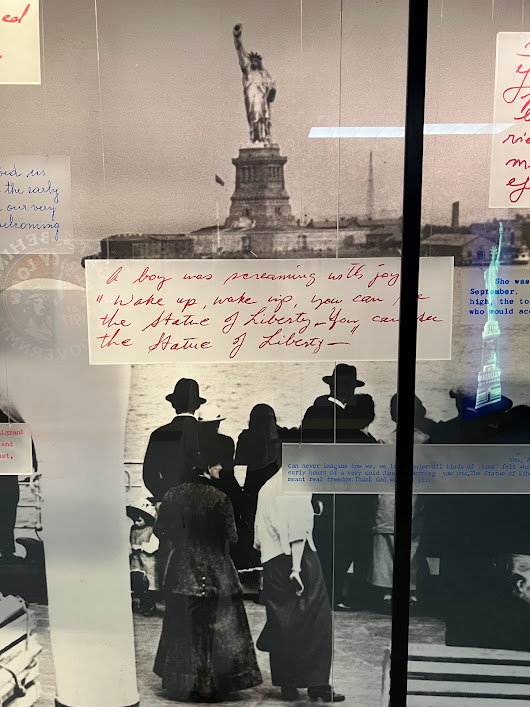
Perhaps, in part, it was that forced early independence that led Michael, like thousands of Italians in the early 20thcentury, to seek new opportunities in America a decade later. By the time the Statue of Liberty came into view, Michael had met his future wife, Lucia, on board. 


Michael and Lucia settled in Worcester where he became a tanner preparing raw cow hides, while Lucia cooked, cleaned, and raised the family. As often happens, their children were staunchly American, and had little interest in the language and culture their parents left behind. However, beyond the barrier of their grandparents’ mystifying inability to speak like normal people, their grandchildren, Dave and Steve, found life at Nanny and Grampa’s house fascinating.


                                                               Michael and Lucia Sylvestro


There was Grampa’s homemade wine served in jelly jars, shelf upon shelf in the basement of canned vegetables from Uncle Jack’s garden, and Auntie Carmela’s heavenly pasta sprinkled with crumbled nuts. When Rinny, the family dog, brought home an unlucky rabbit, Nanny praised the pup, and served the rabbit for dinner. Nothing was ever wasted, much less perfectly good meat. 


Auntie Carmela always told Dave he had the map of Italy all over his face, and when Trinity College offered a semester in Rome, it was a chance to find out. But when we departed in 1973, we flew, never glimpsing the statue that had welcomed Dave’s grandparents.   


At age 69, I sheepishly confess, I’d never seen Lady Liberty up close. So, when our son Tucker invited us to join him, his wife Lisa, and our grandchildren Paul (6) and Lexi (3 ¾) on a visit this summer, Dave and I were all over it.  


Given their ages, it was unlikely the littles would be moved by the statue’s symbolism nor her impact on those escaping persecution and economic hardship as she seemingly rose from the sea in welcome. As yet, Paul and Lexi knew nothing of the Lady’s role in greeting their great-great grandparents, but we hoped the fun of the ferry ride, the whir of helicopters overhead, and a glimpse of massive toes would captivate the kids in ways that heritage, freedom, and opportunity would not. 


It was sweltering the day of our visit, and we were grateful Lisa had insisted on early morning tickets. For most of our time on the dock, we were shielded by an overhang, but before the ferry was even in sight, crew members waved, shouted, and hustled the prospective passengers, herding us like driven cattle onto the sun-baked dock to await transport.  I wondered how similar this discourteous boarding might have been to the start of Michael and Lucia’s journey. They spoke no English, and all that awaited was unknown. What courage to endure the jostle and push, and the lengthy voyage over uncertain seas. 


As we waited in the heat for the ferry to pull in, the kids were amazing.  They really were. But despite our efforts to distract them with glimpses of ships, seagulls, and a treasure trove of coins tossed into gullies along the docks, Lexi and Paul were wilting. Dave hoisted Lexi onto his shoulders and when he tired, transferred her to Tucker’s. When she was finally set on her feet, she gave up and lay down, not whiney or grumpy, mind you, just ready to rest in the shadow of encircling grownups. True to form, Paul used his time constructively, playing chess on Tucker’s phone. 


When the ferry arrived, the staff urged us forward. It was unnerving: the rocking of the boat, the shifting of the gangplank, the press of masked passengers, the unrelenting heat, and the insistent staff. “Keep moving, keep moving. Step up! Step Up!” Again, I imagined Michael and Lucia and all the anxious immigrants like them hoping this gamble was a move forward, a step up. 


Blessedly, we found seats inside, out of the sun. The trip to the island was quick, and as we drew closer, despite my lifelong citizenship and lack of desperation, my first glimpse of Lady Liberty filled my heart with yearning. Unlike the waves of immigrants arriving at the Statue’s feet from 1886-1914, the pang in my heart grew from the beauty and poignancy of the Statue’s message, and America’s failures to meet her promise of refuge. Thoughts of Japanese internment camps; ships turned back to Nazi Europe; and most recently, caged, weeping children separated from their parents weighed on my mind. 


Much as it is my way to sully pleasures with painful reflections, it is the kids’ way to find fun where they can. Soon after docking, we came upon a water system spraying droplets and mist over the brick walkway.  A delightful respite on this steamy day! Visitors of every age, size, and color, speaking countless languages, frolicked, giggled, soaked, and took selfies in the sparkling shower of water. True to form, Paul was primarily intrigued by the hose hook-up. 


Whether it was mindfulness of the kids or the aging grandparents, Lisa, wisely, had not purchased tickets for the crown, and opted only for the pedestal. High enough! Dave and Lisa braved the 195 steps while Tucker, Paul, Lexi, and I waited in line for the elevator. 


For Edouard de Laboulaye, the end of slavery and America’s Civil war signaled an inspirational turning point with potentially global implications. With sculptor Auguste Bartholdi and Gustave Eiffel, he set out to shine the light of freedom around the world with a gift to the newly re-United States in the form of this monumental statue. In October, 1886, “Liberty Enlightening the World” was re-assembled on Bedloe Island. As time passed, the statue came to mean something other than enlightenment. Her torch, her face, and the sunburst of her crown were beacons of freedom, signs of arrival in a safe place. Lady Liberty came to symbolize America itself. 


As it should be, the walkway around the pedestal is surrounded by a wall too high for Paul and Lexi to see beyond. So Tucker and Dave held them aloft while I fluttered about, anxious at mental images of a child going over the side. Better to keep our stay at the pedestal brief, and hustle along to the shelter of the air-conditioned museum.


Vintage souvenirs and posters, and a variety of artistic interpretations of the statue were on display. While Paul and Lexi were drawn to climb and probe massive models of the Lady’s face and foot, I searched for and found the original bronze plaque bearing Emma Lazarus’s poem. “The New Colossus” echoes the vision that motivated de Laboulaye and Bartholdi: “Give me your tired, your poor, your huddled masses yearning to breathe free.” 


For our littles, and perhaps their adults as well, sitting was our current goal. Three darkened theaters, thoughtfully carpeted, offered the refuge we needed. Lexi sat in my lap and Paul snuggled with Tucker as we sat on the floor. Churning waves rolled across the screen as an audience of immigrants’ descendants listened to the story of the Statue of Liberty and her role in the lives of their ancestors.